

Knowledge and religion
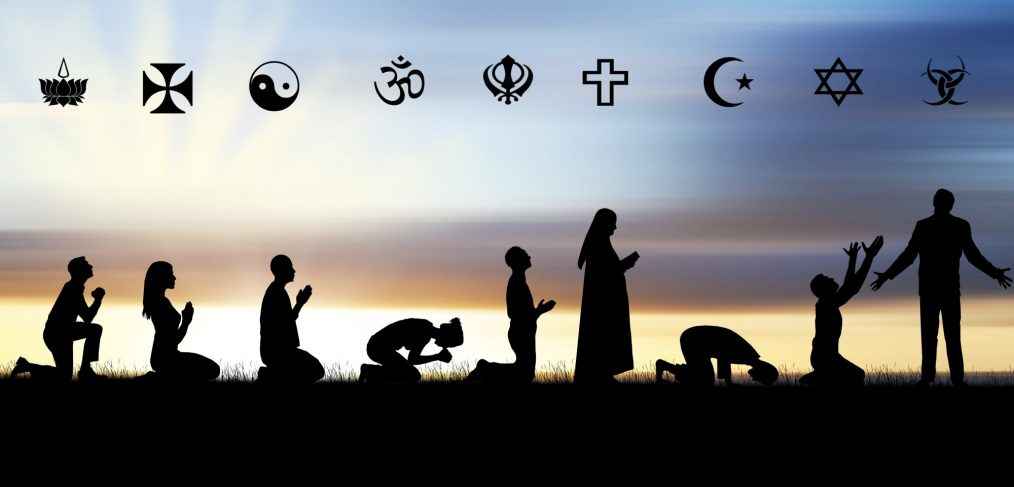
Religion is the human being’s relation to something holy and spiritual. It is also very much related to the perception of the afterlife and such. And an embodiment of believing in a supreme existence and giving names and form to that existence. The rituals and practices followed in order to value and preach the existence of the same. There are around 4300 religions all over the world. What a diversity, right? There are many religions that even don’t believe in idol worship or a supernatural entity or force. Knowledge and religion shape a person, identity, society, development, and so on.
So, it is essential to know how these come around in this purview.
Sigmund Freud is a school of psychoanalyst thoughts; he always had a keen interest in religion. Even when he was an atheist by principle, his interest in religion was probably was because of his Jewish upbringing. In some of his writings, Freud has referred to religion as an illusion.
Religion can thoroughly influence a person’s behavior. It influences our daily life to a great extent. Certain religions promote their believers to enhance veganism and certain others expect their followers to take up fasts and such. To its believers or followers, it always had the power to influence the way how they respond to circumstances and situations.
As people became more educated and exposed to many factors, there’s a drastic change in the current generation who voluntarily take up and decide on religious beliefs. There has been an increase in the number of people who believe in science and disregards the existence of supreme power.
When religion can influence a person, definitely it can influence a society and bring out a system of culture through it. The ways how religion impacts morality is by enforcing religious theories of salvation, hell, and heaven, reincarnations, etc. These notions are believed by many and the societal construct behaves accordingly and its formation is influenced by these. This also creates an inbuilt fear and expects people to work and live in a certain way.
Even knowledge is also affected by such ideologies like not taking medicines while being sick and expecting God to help them out is completely against all the medical theories present in the world.
Taking this as an optional theme for TOK, is the most relevant decision by IB. As because navigating through religion brings out rationality and the conflicts that they can come across as they go deeper into the subject matter. This initiates lots of reasoning and debate on how religion influences even knowledge.
Knowledge Framework- Scope
Knowledge questions
How does science influence our religious beliefs and thoughts?
Science is always accepted when there is enough empirical evidence to support a specific topic of research. Unless and until it is provided, acceptance is a far cry. Whereas in religion it basically focuses on the faith we have and without further ado we accept it. And supernatural elements, cannot be investigated through normal reasoning. Science and Religion have different understanding aspects altogether. Unnecessary controversies are planted by taking these different respects together.
Religious knowledge as a map of direction is taken by many people all over the world. They consider such awakening as a form of life. It all depends on how people intend to perceive the knowledge they receive out of it. There is a large crowd who believes that religious beliefs cater to all the answers for life. It’s an intertwining with seamless faith one rests on it.
Sadh Guru, an excellent orator with deep knowledge in spirituality, has discussed at different points of time about religion and how it’s a belief system. The previous video also suggests how rationally and carefully he explains this sensitive subject.
Knowledge Framework-Perspective
Knowledge and Religion
Religious beliefs are usually instilled in a person from childhood. So pretty much unless a kid turns into an adult, they are impacted by the practices of the house. This has a lot of impact on the perception as they are being clouded by preconceived notions about religion and faith for a very long time. So, accordingly, the perceptions that they form eventually be influenced by all these factors.
People who don’t affiliate to any one religious perspective call themselves “none”. Apparently, there has been a rise in the number of people who don’t follow the norms of a particular faith. Anjali Kumar over here shows her journey to know God and eventually ended up learning an even better ideology which is sane in today’s world pre-dominantly.
Influencing an individual in the name of religion and faith is the most heinous thing to do. Checking down their morality through selfishly twisted religious notions is the worst way mankind and tumble down. Instead, religious construct should be an open-ended system, as the individual gets his/her fair share of exposure, they should be given the freedom to choose the faith that they want to follow or even choosing out to opt-out from the whole business altogether.
Knowledge Framework-Methods and Tools
Knowledge and Religion
When we talk about mythology, even when the word suggests it has zero validation, a large fraction still tends to believe it as the existence of truth. They are believed by large masses that supernatural existed and they are now termed as gods. We start questioning the same over our normal conscience and based on the level of efficient information we have gathered over the year it becomes very difficult to put our hand on it.
Almost every religious mythology comes up with glorifying god and its existence which puts the rational thinkers in utmost misery as reasoning is impossible in such cases. The below video can be taken from different perspectives up to believers and non-believers. This video with reasoning on the miracle of Jesus walking through water.
Faith and reasoning, in my point of view, can never be interdependent. Most theories proposed through religion and faith, will not have empirical evidence which definitely rules out the scope for valid reasoning. Hence, you can’t unduly influence someone to change their perspective because they demand evidencing or fact check on the topic of religious subject matters.
Knowledge framework-Ethics
Knowledge question
Religion and faith have the ability to command their believers about right and wrong. They instigate discussions and enforce their viewpoints with respect to their ideologies and notions. Hence, Knowledge and religious exclusivity are jeopardized eventually.
All around the world people are fighting for LGBTQ rights and many are trying to find acceptance of the same among fellow human beings. Even when there is a rational explanation for all these, people still find the audacity to tell that these are cursed feelings and a sin. Religious texts are manipulated and put forward in selfish interests.
Homophobia is something that is kind of induced by religious beliefs. They say that religious texts portray homosexuality as a sort of bad influence and thereby demeaning its followers to promote conversion therapy which is a scam and pushes homosexual people into depression and suicide. Religious texts are knowingly misrepresented for selfish reasons by homophobic believers.
If you like what you read, you might consider reading Knowledge and Indigenous Societies

